Part 1 of the Railroad Builders of Far West Texas series
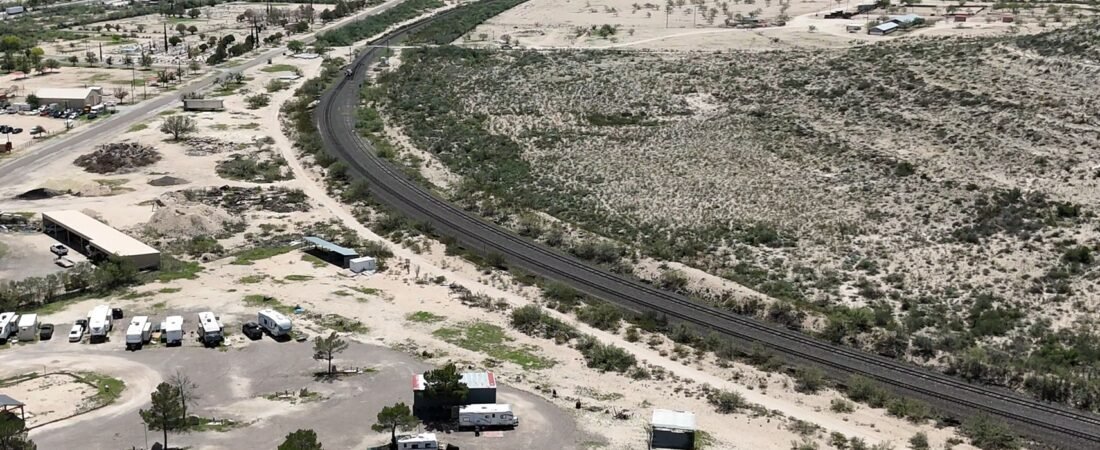
Sanderson is a railroad town. The tracks that reached this part of West Texas in 1882 brought freight, passengers, jobs, supplies, and a lasting connection to the outside world. The railroad helped transform a remote stretch of desert country into the community we know today.
But there is an important part of Sanderson Texas railroad history that deserves more attention.
The Southern Pacific route through far West Texas was built by a massive workforce. Among those workers were thousands of Chinese laborers. Their individual names are rarely preserved in the local historical record, and I have not found evidence of a permanent Chinese community in Sanderson during the early railroad-construction era.
What can be documented is still significant: Chinese railroad workers were a major part of the construction force that built the Southern Pacific route across far West Texas, and archaeology near Langtry confirms that Chinese workers lived in a large railroad construction camp in this region during 1882.
Their work helped create the railroad corridor that made Sanderson possible.
How the railroad created Sanderson
Sanderson began in 1882 as railroad construction moved through Terrell County. Early historical accounts refer to the place as Strawbridge or Strowbridge before the town became known as Sanderson. It developed as an important railroad division point, with facilities and workers supporting train operations across this remote section of West Texas.
The railroad changed daily life in the region. Before the tracks arrived, long distances, rough roads, and limited transportation made travel and trade difficult. Once the rail line was established, it connected ranchers, businesses, travelers, and residents to markets and communities far beyond Terrell County.
For Sanderson, the railroad meant more than transportation. It created work, brought investment, and gave the town a reason to grow where it did.
The familiar local story includes trains, rail employees, the old depot, livestock shipments, businesses, and the role Sanderson played along the line. But before there could be a railroad town, there had to be railroad builders.
Chinese railroad workers in Texas
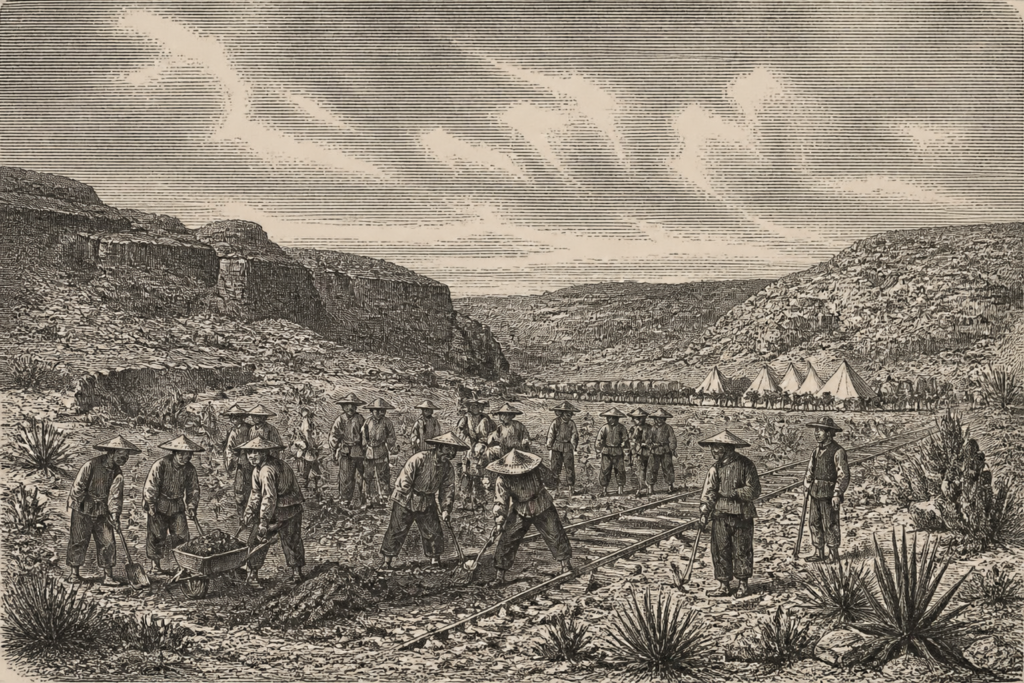
The Southern Pacific construction project through far West Texas was part of a larger effort to connect railroad lines across the Southwest. The western construction division worked eastward from El Paso toward the Pecos River. It was directed by James H. Strobridge, a construction superintendent who had previously overseen Chinese railroad labor crews in the West.
At the peak of construction in January and February 1882, Strobridge’s division reportedly employed more than 7,000 people. About 6,000 of those workers were Chinese laborers.
That was a remarkable workforce moving across an isolated and difficult landscape. The job required people to grade the route, move rock and dirt, haul materials, construct roadbeds, lay track, prepare meals, maintain equipment, and establish temporary camps as construction advanced.
Chinese workers already had extensive railroad experience in the American West. They had helped build major rail lines under dangerous and unequal conditions, often working in organized crews with cooks and headmen. By the early 1880s, they were an essential part of the labor system used to build railroads across the Southwest.
A Stanford University research publication notes that Chinese workers made up the majority of crews working eastward from Langtry on the Galveston, Harrisburg and San Antonio Railway—the Southern Pacific-connected line that crossed this region.
That matters to Sanderson because the railroad route through Langtry, the Pecos River area, and Terrell County was part of the same construction campaign that reached Sanderson in 1882.
The Langtry Construction Camp
The strongest nearby evidence comes from Langtry, west of Sanderson.
In 1974, archaeologist Alton K. Briggs investigated a railroad construction camp now identified as archaeological site 41VV585, often called the Langtry Construction Camp. The camp was occupied briefly in 1882 during the push to complete the railroad connection through far West Texas.
The site contained stone-lined platforms where temporary tents had stood. Archaeologists also found hearth features and artifacts connected to the workers who lived there.
The evidence suggests that the camp had a predominantly Chinese workforce. Briggs estimated a ratio of approximately 17 Chinese workers for every one Anglo worker based on the artifacts recovered. The National Park Service estimates that about 550 to 665 workers lived at the camp for a brief period. Later archaeological scholarship estimates that perhaps 500 to 665 Chinese residents were present. These are research-based estimates, not a surviving census or payroll list.
Even with those limitations, the Langtry camp tells us something important.
Chinese railroad workers did not merely pass through this history as an abstract labor force. They lived in this part of West Texas. They built temporary homes, prepared meals, worked long days, and left behind material evidence that can still be studied today.
Food, shelter, and daily life
One of the most revealing discoveries at the Langtry camp was a set of double-hearth features.
Briggs interpreted these hearths as Chinese cooking arrangements: one side likely used for steaming rice, while the other was used for frying meat and vegetables.
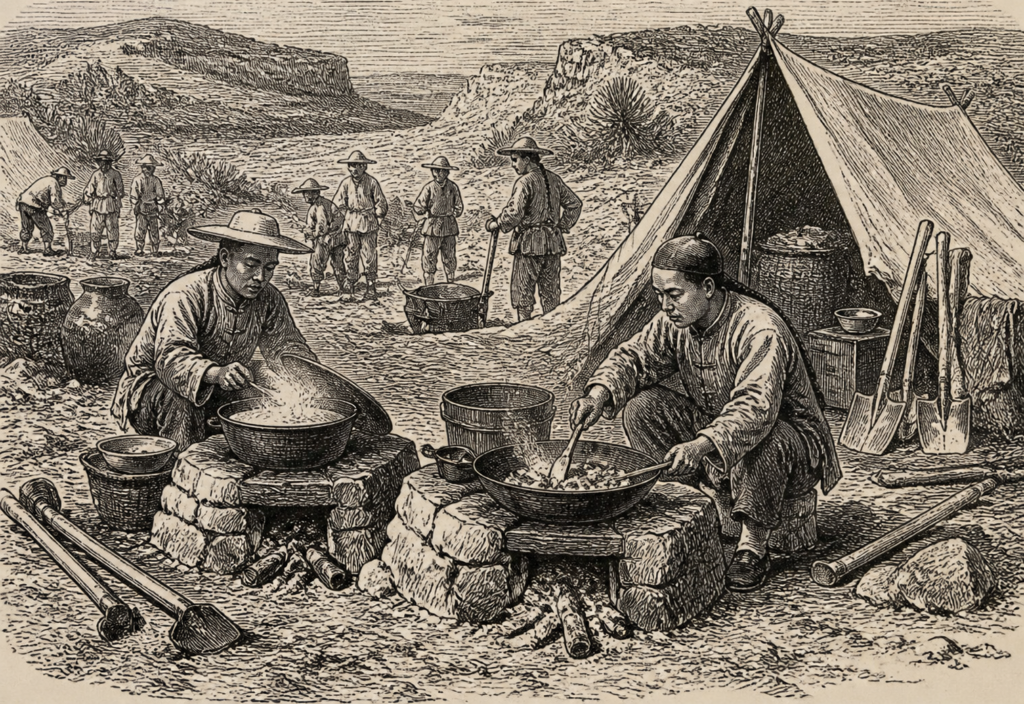
That detail gives us a rare glimpse of daily life. Even while working in a remote and temporary construction camp, Chinese laborers maintained familiar food traditions.
Research at Chinese railroad camps elsewhere in the West shows that workers often relied on organized group cooking. Their diets could include rice, tea, pork, poultry, dried seafood, preserved foods, vegetables, and supplies acquired through Chinese merchant networks.
It is important to distinguish between the evidence. At Langtry, the hearths support the conclusion that Chinese workers prepared rice and fried foods. The broader list of food items comes from research at other Chinese railroad camps and should be treated as historical context—not as a confirmed Langtry menu.
The workers’ shelters were temporary as well. The stone-lined tent platforms at Langtry indicate a construction camp built to serve the railroad workforce for a limited time. As construction advanced, the workforce could move with the work, leaving behind traces of camp life in the ground.
Hard work and unequal treatment
Railroad construction was hard, dangerous work. Chinese railroad workers in the American West faced difficult terrain, remote camps, extreme weather, accidents, and discrimination.
In the Sierra Nevada, laborers faced tunnels, explosives, rockslides, snow, and avalanches. In far West Texas, the hazards were different. Workers dealt with heat, sun exposure, long distances, limited water, rough country, isolation, and the physical demands of grading and track construction.
The labor system was unequal. National Park Service research indicates that Chinese railroad workers were paid, on average, about 30 percent less than white workers. They also commonly had to pay for their own food, lodging, supplies, and equipment.
I have not located a verified wage schedule for the Langtry camp or for Chinese workers specifically assigned to the Sanderson-area route. Until a payroll record is found, it would be inaccurate to state an exact local wage.
Still, the wider historical pattern is clear. Chinese laborers often performed essential and dangerous work while receiving less pay and carrying more of the cost of daily survival than white workers.
They also resisted unfair treatment. In 1867, Chinese Central Pacific railroad workers organized a major strike seeking higher wages, shorter hours, and safer working conditions. That strike happened in California, not Texas, but it shows that Chinese railroad workers recognized the inequalities they faced and organized collectively to challenge them.
Men far from home
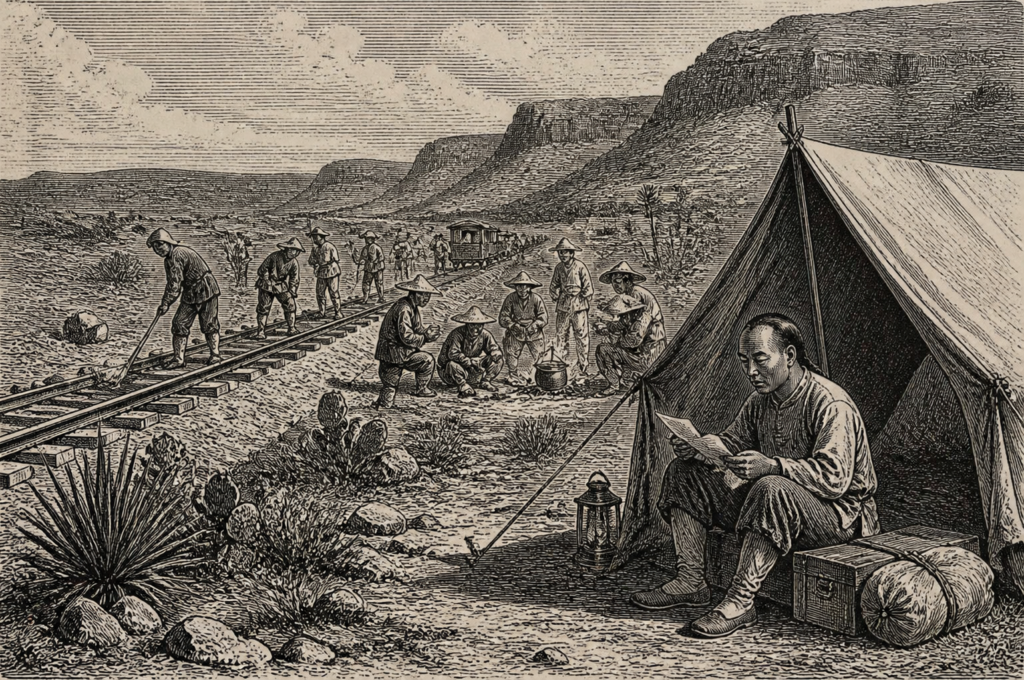
The Chinese railroad labor force was overwhelmingly male. Many workers came from southern China, particularly Guangdong Province, seeking work and wages. Many also had close family ties in China, including parents, wives, children, siblings, and communities they hoped to support through their earnings.
The available research does not document Chinese women or children living at the Langtry Construction Camp. The evidence points to a temporary, mostly male railroad labor camp rather than a settled family community.
Federal immigration restrictions contributed to this reality. The Page Law of 1875 restricted Chinese women’s immigration, and the Chinese Exclusion Act became law in 1882. These policies made it much harder for Chinese immigrants to establish stable family lives in the United States.
The lack of names remains one of the hardest parts of this history. Railroad companies often did not preserve complete records of Chinese workers, and few personal letters or diaries have survived. Archaeology helps establish where people lived and how they worked, but it cannot yet tell us the full story of every worker who helped build the line through far West Texas.
Why this belongs in Sanderson history
The Southern Pacific connection was completed in 1883. According to the National Park Service, most Chinese workers involved in the construction effort then returned toward California for additional railroad work, while only a small number remained in Texas. Some former Southern Pacific workers later contributed to the growth of El Paso’s Chinatown.
Sanderson continued as a railroad town. The line that helped create this community was built by many hands, including those of Chinese laborers whose individual names may never be recovered.
Their story belongs in the history of Sanderson—not because every local detail is known, but because the evidence shows they were a major part of the railroad-building force in this region.
In Part 2 of this series, I will take a closer look at the Langtry Construction Camp, what archaeologists found there, and what the camp reveals about Chinese railroad workers in West Texas.
Help document this history
Do you have historical photographs, family stories, newspaper clippings, letters, artifacts, or research related to Chinese railroad workers, the Southern Pacific route, Sanderson, Langtry, or the Pecos River corridor?
I welcome corrections, additional sources, and leads. Contributors may be named, credited generally, or remain anonymous—according to their preference. Please contact [admin@sandersontexas.org] or send a message through the SandersonTexas.org Facebook page.
Continue the series
- Part 1: The Chinese Railroad Workers Who Helped Make Sanderson Possible
- Part 2: The Lost Railroad Camp at Langtry: What Archaeology Reveals
- Part 3: Life on the Line: Food, Pay, Danger, and Family Among Chinese Railroad Workers
A note from the researcher
I am continuing to research this history. The available record documents Chinese railroad workers in the far West Texas construction corridor and at the 1882 Langtry camp, but many individual names and local details remain unknown. This article will be updated as additional documents, photographs, archaeological research, and community recollections become available.