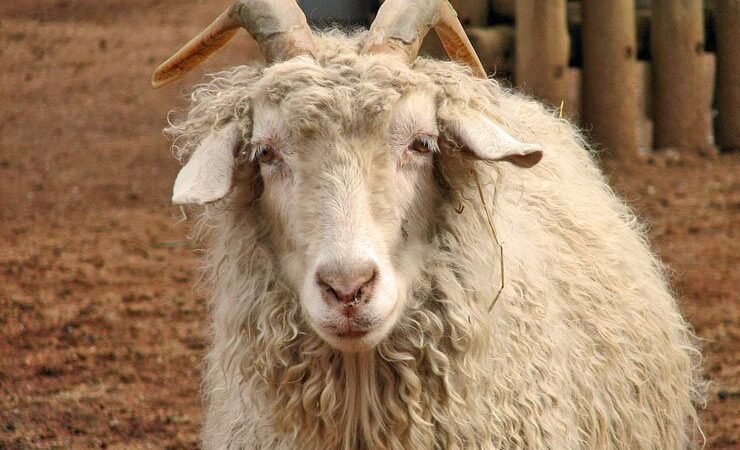
Sanderson did not simply grow up in West Texas; it was shaped by the hard realities of sheep, goats, railroads, and the fibers those animals produced. For decades, wool and mohair were the quiet engines of the local economy, moving from the ranches of Terrell County through freight houses and commissions before reaching textile mills far beyond the desert. In Sanderson, the history of the town is also the history of the wool and mohair trade that gave it purpose, prosperity, and eventually, a need to adapt.
What Wool and Mohair Mean
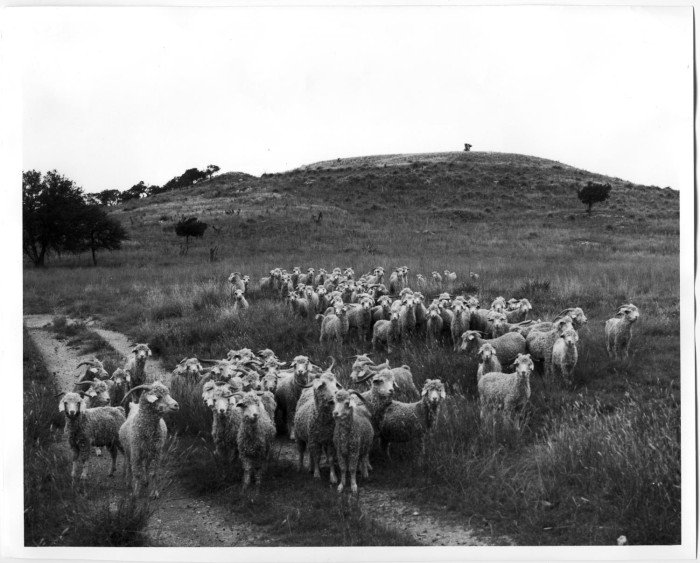
This photo comes from University of North Texas / The Portal to Texas History.
Wool comes from sheep, while mohair comes from the Angora goat. Wool is valued for warmth, durability, and insulation, while mohair is known for its smooth texture, natural sheen, and strength. Together, these fibers helped make Texas a leader in natural fiber production, and in West Texas they became a practical foundation for ranch life and rural commerce. In places like Sanderson, wool and mohair were not abstract agricultural products; they were the means by which ranchers turned livestock into income.
How Sanderson Became a Shipping Center
Sanderson’s role in the wool and mohair economy began with the railroad. When the Southern Pacific line reached the area, the town became a strategic point where ranchers could move livestock and fiber to market, and the rail line brought both jobs and opportunity. A larger freight house was built to handle the heavy shipments of wool and mohair, a clear sign that the trade had become central to local life. For ranchers across Terrell County, Sanderson was where the work of the range met the larger world of commerce.
The Boom Years in Sheep, Goats, and Fiber
Terrell County became one of the largest sheep-producing counties in the United States, and its ranch economy depended heavily on wool and mohair. One of the most memorable moments in that boom came in 1926, when 11,000 lambs were sold at an average of $6 per head, a sale remembered in local history as one of the county’s most significant. The Sanderson Wool Commission also shipped thousands of pounds of wool and mohair each year, helping establish the town as a serious market center rather than just a rail stop. By 1930, the county reported more than 351,000 sheep, showing how dominant livestock production had become.
How Wool and Mohair Were Marketed
Wool and mohair had to pass through a chain of work before they became cash in a rancher’s pocket. Sheep and goats had to be managed, shorn, graded, and hauled to the right place, and local commissions and freight houses made that possible. Sanderson sat at the center of that process, linking remote ranch country with textile mills and buyers far beyond West Texas. At one point, the town was shipping over a million pounds of wool and mohair to mills across the country, underscoring how large the trade had become.
Why the Wool and Mohair Business Declined
The decline of wool and mohair happened gradually, but the forces behind it were powerful. Synthetic materials replaced wool in many everyday products, and processors in other countries could often produce fiber more cheaply. Federal incentive programs that had helped support the industry were phased out, and ranchers also faced predator losses, labor shortages, drought, and changing market conditions. The industry did not vanish overnight; it was slowly squeezed by a changing economy that made the old ranching system harder to sustain.
How Sanderson Changed with the Industry
As the wool and mohair economy weakened, Sanderson changed with it. The town had grown around the railroad and livestock trade, so when those systems became less central, the community felt the loss in employment, commerce, and population stability. Sanderson still moved wool and mohair in later years, but the scale was smaller and the economic momentum was no longer the same. The town reached its peak population of about 3,000 in the 1950s before beginning a long decline. That pattern was part of a broader West Texas story, where rail-dependent ranch towns had to adjust to a different era.
Why Sanderson Still Matters
Sanderson remains important because it captures a larger Texas story in one place. The town’s rise was built on wool, mohair, railroads, and ranching, while its later decline reflected changing markets and transportation patterns. For readers interested in Texas history, rural economies, or the natural fiber industry, Sanderson offers a clear example of how a small town can be shaped by a single trade. Even after the boom years faded, wool and mohair remained part of the town’s identity and historical memory.
Sanderson Texas History