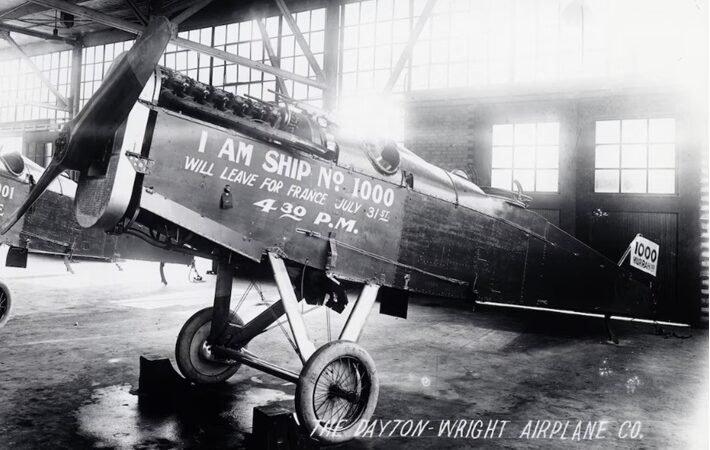
If you have ever driven U.S. 90 through Sanderson, it is hard to imagine that this quiet Cactus Capital of Texas once had a U.S. Army airfield built specifically to patrol the border from the sky. For a brief window after World War I, Sanderson Field put de Havilland DH‑4 biplanes and the 90th Aero Squadron right on the edge of the Big Bend.
This is the story of how Sanderson, Texas became an early hub for aerial border patrols years before the official U.S. Border Patrol existed, and how that story faded into the desert dust.
Why the Army Built an Airfield at Sanderson, Texas
The roots of Sanderson Field go back to the end of World War I and the long shadow of the Mexican Revolution. By 1918 and 1919, the Regular Army and its air arm were under orders to defend the southern border against raids and to help clamp down on smuggling along the Rio Grande.
To do that with the brand new tool of powered flight, the Army created what historians now call the United States Army Border Air Patrol. The idea was simple but ambitious: stretch a chain of aircraft and temporary landing fields from California to Texas, so pilots could watch remote stretches of border that horse patrols could not easily cover.
In late summer 1919 the 464th Aero Construction Squadron was sent from Kelly Field near San Antonio to establish an Army airfield at Sanderson, Texas. The site became known as Sanderson Field, and records show it was used by the 90th Squadron (Surveillance) between 1919 and 1921. It was not a big brick and concrete base like you see in World War II photos. It was a dirt strip, tents and light hangars laid out just far enough from town to give pilots room to work.
The 90th Aero Squadron and DH‑4 Biplanes Over the Big Bend
The 90th Aero Squadron had already earned its spurs over France as a World War I observation unit. After the Armistice, instead of heading straight into peacetime, the squadron was tasked with a very different theater: the deserts and canyons of West Texas.
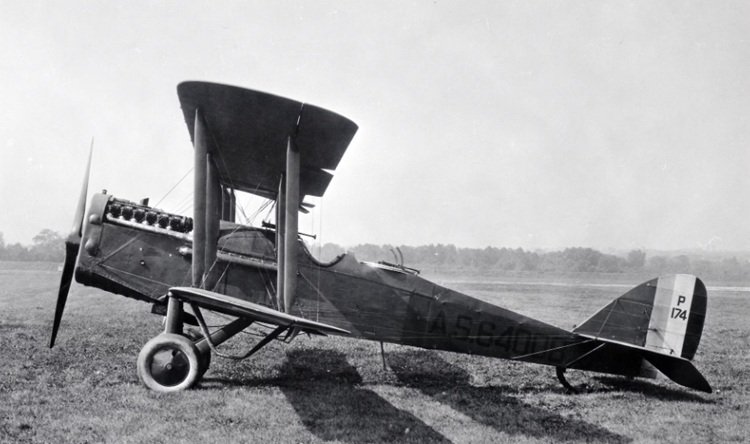
Their new mount was the Dayton Wright built de Havilland DH‑4, a two seat wood and fabric biplane armed with Lewis machine guns and set up for reconnaissance, photography and light attack. Contemporary photos show DH‑4s of the 90th Squadron flying over mounted cavalry near Sanderson, a perfect image of a moment when horse patrols and airplanes shared the same mission along the border
An Air Force biography of Martinus Stenseth adds one more important detail. In June 1919 he was ordered to Sanderson, Texas, as commanding officer of the airdrome and of the 90th Aero Squadron. That line nails down the fact that Sanderson Field was not just an emergency strip. It was an organized Army Air Service station with a named commanding officer and a defined border surveillance role.
From Sanderson, those DH‑4s could head south to the Rio Grande and then turn west toward Lajitas or east toward the Devils River, following the bends of the Big Bend region in the same general corridors later flown by modern Border Patrol and Air and Marine Operations aircraft.
Sanderson Field: A Short Lived Border Airfield
Sanderson Field’s life was short and, for a long time, poorly remembered. The Army’s method in 1919 was to build lightweight, quickly assembled airstrips near rail lines, use them as long as needed, and then walk away once the threat level dropped.
Sanderson was ideal for that model. The Southern Pacific railroad had turned it into a key stop and county seat, which meant fuel and supplies could reach the airfield by train. The town sat close enough to the border to keep flight times reasonable but far enough from the river’s edge to give some margin for weather and terrain.
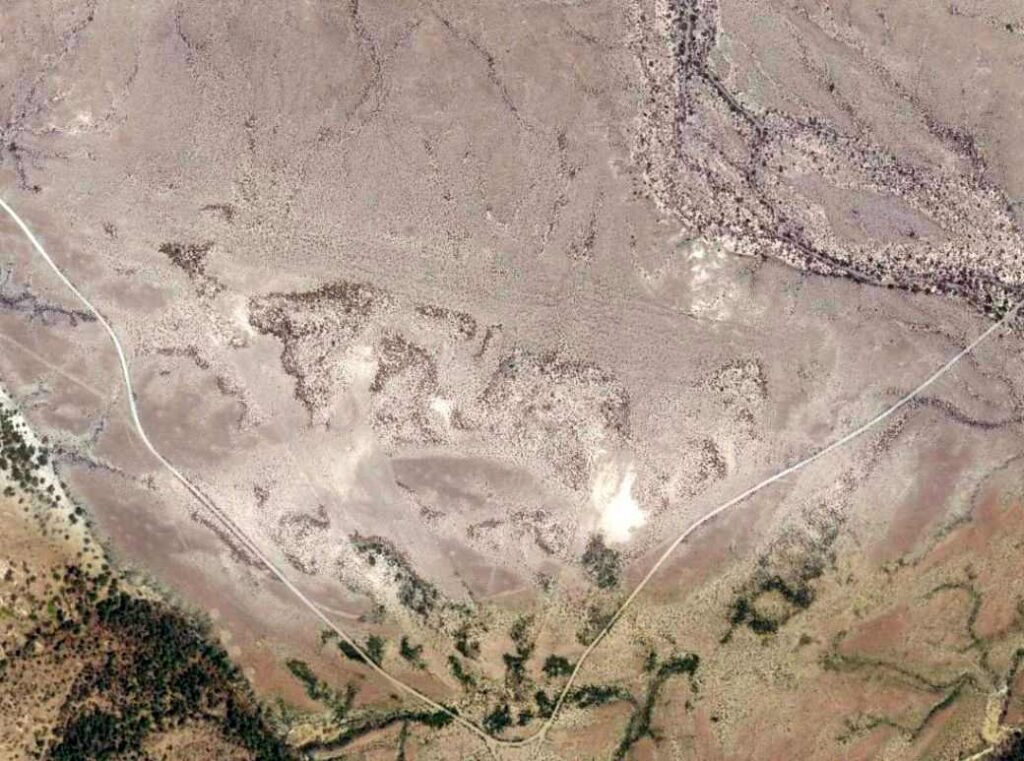
By around 1921, as the major violence of the Mexican Revolution eased and Washington cut back temporary wartime structures, the 90th Squadron moved on and Sanderson Field was abandoned. A modern summary of the field’s history notes that its later fate is unknown and that the land “was apparently abandoned, the land redeveloped as part of the city of Sanderson.” In practical terms, that means the old landing ground likely lies under today’s streets, houses and businesses, its outline blurred by a century of change.
Jimmy Doolittle and the Pecos High Bridge Legend
Any time you start digging into early aviation in Far West Texas, the name Jimmy Doolittle eventually shows up. Long before he became famous for the 1942 Doolittle Raid on Tokyo, he was a young Army pilot with a reputation for daring and sometimes reckless stunts.
One of the most enduring stories puts him at the Pecos River high bridge, the towering Southern Pacific railroad bridge east of Sanderson. A Defense Department study on Doolittle notes that he “introduced some excitement into the missions by flying between two narrowly spaced pylons supporting the Pecos River High Bridge,” a phrase that quietly hints at some very low flying under a massive steel structure. Other retellings talk about him flying under the bridge outright, a detail that has become part of local and aviation lore.
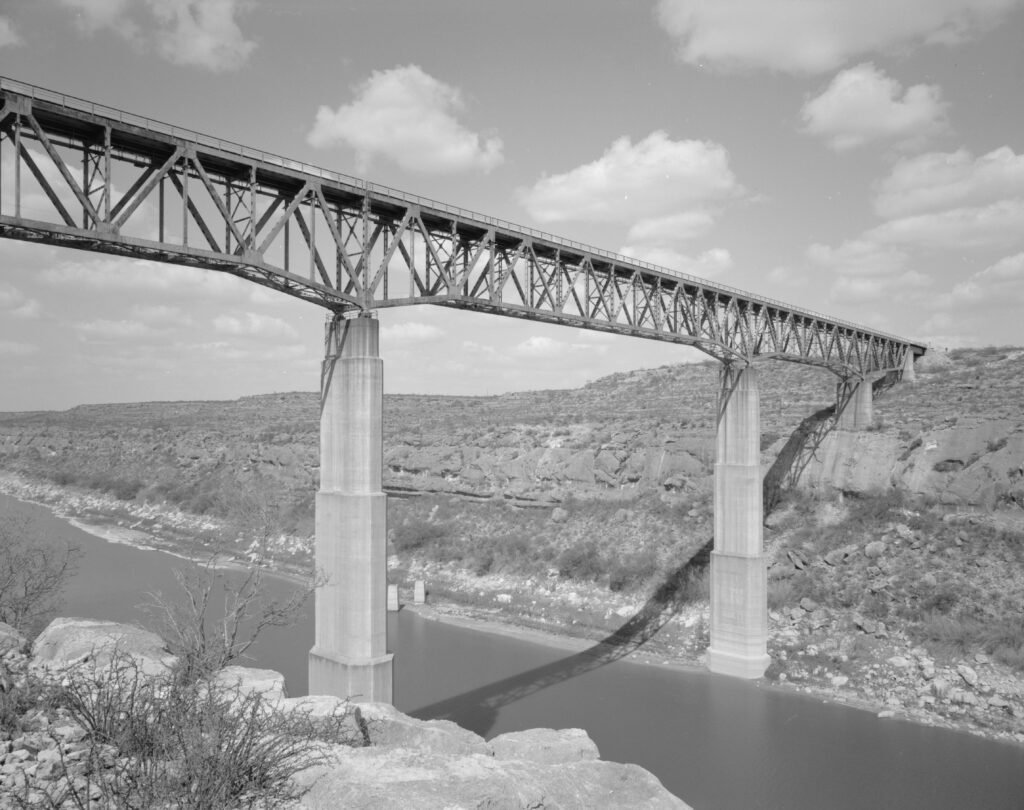
What we can say firmly is that Doolittle was flying in Texas in the early 1920s, that he had a documented habit of hair raising stunts, and that one of those stunts involved the Pecos high bridge on the same rail line that ties Del Rio and Sanderson together. The official sources do not list him as stationed at Sanderson Field itself, but given how tightly knit the border air patrol world was, it is easy to see why people in Terrell County and along the Pecos claimed the story as their own.
So when you hear old timers in Sanderson talk about Doolittle taking a dare to fly under the bridge and somehow avoiding court martial, you are hearing a local version of an episode that does have a solid historical core.
From Sanderson to Johnson’s Ranch: A Chain of Border Airfields
Sanderson becomes even more interesting when you zoom out and look at the pattern of early border airfields in the Big Bend and Trans Pecos. In June 2024, a Big Bend Sentinel history piece described the region as “the nexus of a grand experiment with the newest border surveillance technology: airplanes,” noting how Marfa and other small fields hosted DH‑4s that locals called “flaming coffins” because of their fuel systems.
Sanderson was part of the first wave of that experiment. A decade later, another remote river outpost joined the chain. On April 11, 1929, Mexican raiders attacked Elmo and Ada Johnson’s trading post at Johnson’s Ranch, a lonely spot on the Rio Grande downstream from present day Big Bend National Park. In response, the Army Air Corps and ground forces established an emergency landing field on the ranch that July, turning it into the first permanent Air Corps installation in the lower Big Bend.
The Texas State Historical Association notes that Johnson’s Ranch “entered the air age” at that moment, as planes began using the strip to stage troops and patrol flights in case of another raid. Flights in and out of Johnson’s Ranch continued into the early 1940s, and a 1943 entry marks the last recorded flight.
Put Sanderson Field, Marfa, and Johnson’s Ranch on the same map, and you can see a dotted line of early border airfields and patrol routes running along the Rio Grande. They were all built for the same reason: to extend the eyes and ears of U.S. forces in places where there were more miles of river than there were men on horseback.
Aerial Border Patrol Before the Border Patrol
The official Border Patrol dates to 1924, when Congress created a dedicated agency to patrol both the northern and southern borders. Sanderson appears in those histories too, because the Sanderson Station opened in 1924 and has operated as a Border Patrol station ever since.
But Army aviation was already doing “border patrol” work in everything but name. The border air patrol of 1919 consisted of 67 planes, 104 officers and 491 enlisted men, stretched across hundreds of miles of frontier. In the Big Bend region, those planes flew from places like Fort Bliss, Marfa and Sanderson, often in coordination with U.S. Cavalry units on the ground.
If you think of the modern Big Bend Sector, with its blend of agents, cameras, drones and aircraft watching over 510 miles of river, Sanderson Field looks like an early prototype of that combined approach. The technology has changed radically, but the basic problem and the basic geography have not.
Why Sanderson’s Early Aviation Story Matters Today
Sanderson’s airfield was small and temporary. It left few physical traces. Yet when you stitch together unit histories, Air Force biographies, National Park Service notes, and scattered photographs, a vivid picture comes into focus. For a couple of years right after World War I, Sanderson Field was one of the Army’s eyes in the sky over the Rio Grande. It tied the town into a larger chain of border airfields that stretched from Marfa to Johnson’s Ranch and beyond.
If you are driving through Sanderson today or planning a Big Bend road trip, knowing this story changes how you see the landscape. The Pecos high bridge is no longer just a dramatic railroad crossing. It is the site of a famous low level stunt by a future Medal of Honor recipient. The quiet streets and cactus covered hills around Sanderson hide the ghost of an airfield where DH‑4s once took off into the desert heat.
For a town that is already proud of its railroad heritage, cactus identity and role as a gateway to Big Bend, adding “early border airfield” to the mix makes Sanderson’s story even richer.
Sanderson, Texas History