
How Terrell County Government Works—and How Residents Can Be Heard
Terrell County government follows the traditional Texas county model: voters elect several county officials with separate responsibilities, while the County Judge and four precinct commissioners serve together on the Commissioners Court, the county’s main governing body. Terrell County was created from Pecos County in 1905, and Sanderson became its county seat.
For residents, newcomers, property owners, and local businesses, knowing how county government works makes it easier to find the right office, ask better questions, and take part in local decisions. County government touches daily life through roads, property taxes, elections, public records, courts, public safety, and the operation of the courthouse.
The basic structure
Terrell County is not run by one mayor-like executive. Texas counties divide authority among independently elected officials, each with responsibilities set by state law.
The county’s main governing body is the Commissioners Court. Despite its name, it is usually not a courtroom where criminal or civil trials are held. It is the body that handles many of the county’s major administrative, financial, and policy decisions.
Terrell County Commissioners Court has five voting members:
- The County Judge, elected countywide
- Four County Commissioners, each elected from one geographic precinct
Together, the court considers matters such as the county budget, property-tax rate, county facilities, contracts, major purchases, employee compensation, public infrastructure, and other official county business. County commissioners also have particular responsibility for roads and bridges in their precincts.
The Commissioners Court
The Commissioners Court is where countywide decisions are made. Its work can include:
- Adopting the county budget and tax rate
- Considering contracts, bids, and major purchases
- Managing county property and facilities
- Addressing roads, bridges, drainage, and other infrastructure needs
- Establishing certain county employment and benefit policies
- Reviewing public matters that have been properly placed on a meeting agenda
As listed on the Terrell County website in August 2026, the court includes County Judge Dale Carruthers and commissioners representing Precincts 1, 2, 3, and 4. The court meets at the Terrell County Courthouse in Sanderson.
Residents can find court minutes, public notices, and other county information through the official Terrell County website.
The County Judge and Commissioners
The County Judge presides over Commissioners Court meetings and has one vote, just like each commissioner. In a smaller Texas county, the judge also has major administrative responsibilities, including serving as the county budget officer and representing the county in various official matters.
Each County Commissioner represents a precinct, giving residents in every part of Terrell County a direct representative on the court. Commissioners help make countywide policy and budget decisions, but they also serve as local points of contact for concerns involving roads, bridges, drainage, county facilities, and other precinct needs.
One commissioner cannot make a county decision alone. The court must act collectively during a properly posted public meeting.
Other county offices
The Commissioners Court is only one part of Terrell County government. Several other elected offices perform their own legal duties and answer directly to the people who elect them.
| County office | General role |
|---|---|
| County and District Clerk | Maintains official records, serves the courts and Commissioners Court, and handles responsibilities such as marriage licenses and election-related work. |
| Sheriff | Enforces state law, operates the county jail, provides courthouse security, and serves warrants and other legal papers. |
| Tax Assessor-Collector | Collects property taxes and commonly handles vehicle registration, title work, voter registration, and certain state and county fees. |
| County Treasurer | Receives, safeguards, accounts for, and disburses county funds as authorized. |
| County Attorney | Advises county officials, represents the county in certain civil matters, and may prosecute misdemeanor cases. |
| Justice of the Peace | Handles certain small civil cases, misdemeanor matters, landlord-tenant disputes, inquests, and magistrate duties. |
| Constable | Serves civil process, warrants, and other legal papers and may assist Justice Court. |
This division of authority matters. Not every county question belongs before Commissioners Court, and the County Judge or an individual commissioner generally cannot direct another independently elected official in the day-to-day operation of that office.
How residents can raise concerns
Residents have several ways to communicate with county government. The best place to begin is usually the office responsible for the particular service, record, road, tax matter, or procedure involved.
When making a request or raising a concern, putting it in writing is often helpful. Keep copies of emails, letters, screenshots, dates, and notes from phone conversations. If the concern involves poor communication, an unclear answer, a lack of response, or unprofessional service, a specific and calm written complaint is often the strongest starting point.
A useful written concern should include:
- The date, time, and method of contact
- The office or employee involved, if known
- The question, request, or problem
- A factual description of the response—or lack of response
- Relevant documentation
- A clear request for follow-up, acknowledgment, clarification, or correction
For example, saying that an email sent on a specific date received no acknowledgment after several business days gives an office something concrete to review. A respectful, factual complaint is more likely to lead to a useful response than a general accusation.
When to contact a commissioner
A County Commissioner can be a useful contact when a concern affects more than one person or relates to a matter within Commissioners Court authority.
Examples include:
- Roads, bridges, drainage, and county facilities
- County budget priorities
- Access to public information or county meetings
- Repeated problems with county services
- The need for clearer public procedures or points of contact
- A community request for better communication or public-facing information
A commissioner can listen to residents, ask questions, and raise an issue with the full court. However, one commissioner cannot independently direct another elected office, discipline another office’s employees, or decide a complaint involving another office’s routine operations. Those offices have separate authority under Texas law.
When a concern is broad or recurring, residents may wish to contact the County Judge and all four commissioners with the same factual written information. That gives the full governing body a chance to understand whether a countywide policy, resource, public-information, or service issue needs attention.
Public meetings and participation
Commissioners Court meetings are open to the public. Residents can monitor notices, agendas, and minutes through the county website.
Anyone who wants the court to consider an issue should contact the County Judge’s office or County Clerk’s office and ask about the current process for public comment or requesting that a matter be placed on a future agenda. Under Texas open-meetings requirements, the court can generally deliberate or take action only on subjects that have been publicly posted in advance.
A good public comment is short, respectful, and focused on a practical request. For example:
“I am asking the Commissioners Court to consider ways to improve how county offices acknowledge and respond to public questions. Clear points of contact, written procedures, and reasonable response expectations would help residents understand where to go and what to expect.”
That type of request focuses on better public service without singling out a person or office.
How the system began
Terrell County’s system of government comes from a structure that predates the county itself.
During the Republic of Texas era, county government was managed by a County Board made up of a chief justice and justices of the peace. Texas changed its county-government system through several constitutions. The modern Commissioners Court model—one County Judge and four precinct commissioners—was established under the Texas Constitution of 1876.
County judges and commissioners originally served two-year terms. A constitutional amendment adopted in 1954 changed those terms to four years.
When Terrell County was formed in 1905, it was organized under this longstanding Texas county-government framework.
The creation of Terrell County
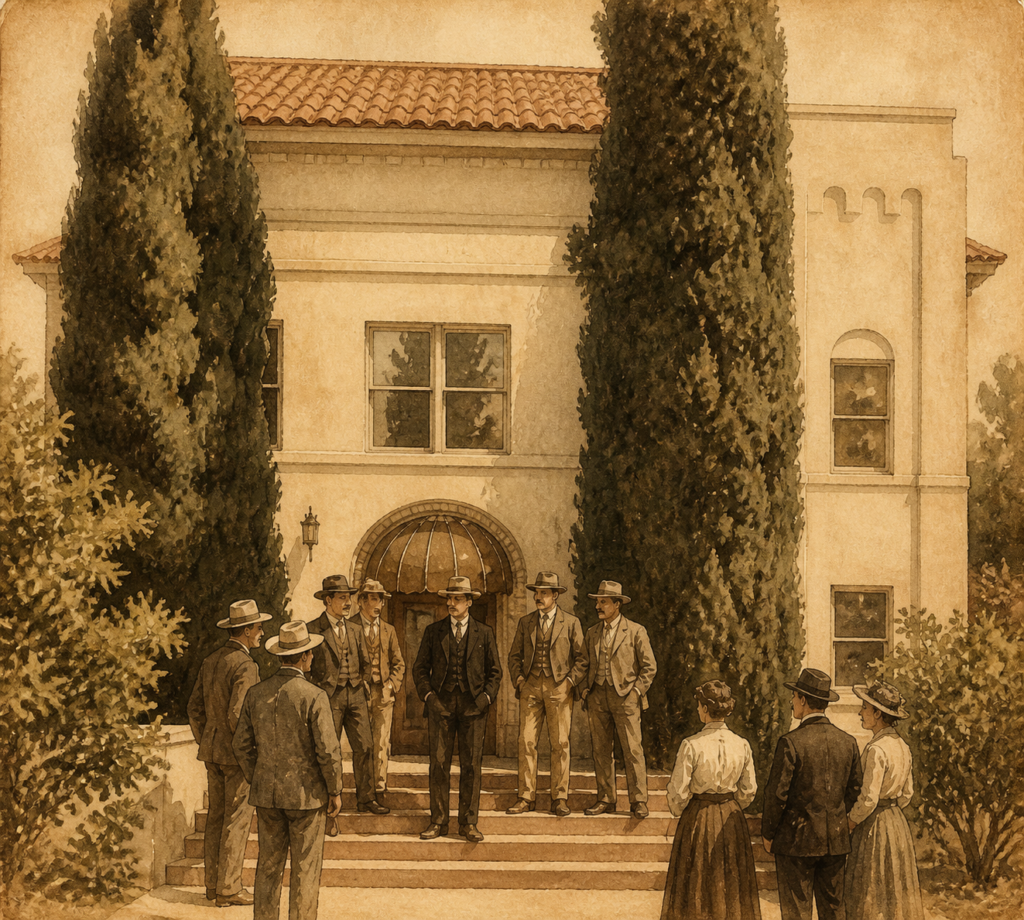
Before 1905, the area that now makes up Terrell County was part of Pecos County. New settlement and railroad construction brought activity to the region in the early 1880s, and the community that became Sanderson developed near the rail line.
The Texas Legislature created Terrell County on April 8, 1905. The county was named for Alexander Watkins Terrell, a Texas attorney, judge, legislator, diplomat, and Confederate officer. It was organized on July 27, 1905, and Sanderson became the county seat.
Sanderson had already developed into an important railroad community. The town began as Strawbridge, a townsite associated with Cyrus W. “Charley” Wilson. When the Galveston, Harrisburg and San Antonio Railroad reached the site in 1882, the community became known as Sanderson.
The placement of the courthouse and county offices in Sanderson made the town the center of public life for the new county. More than a century later, it remains the seat of Terrell County government.
Why this matters
County government can seem complicated until someone needs a public record, tax receipt, voter information, a road repaired, court assistance, or help navigating a county service. Knowing the structure helps residents bring a concern to the appropriate office and understand when an issue belongs before Commissioners Court.
The Commissioners Court cannot solve every individual complaint, but it remains an important public forum for countywide matters involving budgets, infrastructure, public facilities, policy, and recurring service concerns. Residents who stay informed, communicate clearly, attend meetings, and vote in local elections help keep county government connected to the community.
Sources and further reading
- Terrell County official website
- Terrell County Commissioners Court
- Terrell County public notices
- Terrell County Commissioners Court minutes
- Texas Association of Counties: Duties of Texas County Officials
- Handbook of Texas: Terrell County
- Handbook of Texas: County Commissioners’ Court
- Public Office Accountability in Terrell County, Texas
- When News Travels Fast: Sanderson’s Media History and the Need for Trustworthy Information