The Charlie Wilson Whiskey Legend of Early Sanderson, Texas
Before Sanderson became known as the Cactus Capital of Texas, it carried a far more hard-edged nickname: the town too mean for Roy Bean.
The phrase comes from one of Sanderson’s best old tales—a saloon rivalry involving town founder Charlie Wilson, the legendary Judge Roy Bean, and a batch of whiskey said to have been ruined with kerosene.
Like many frontier stories, some details are firmly documented while others belong to local tradition. But together, they reveal something important about early Sanderson: this was a railroad town with its own character, its own founder, and enough grit to give even Roy Bean a difficult time.
Sanderson Begins as a Railroad Town
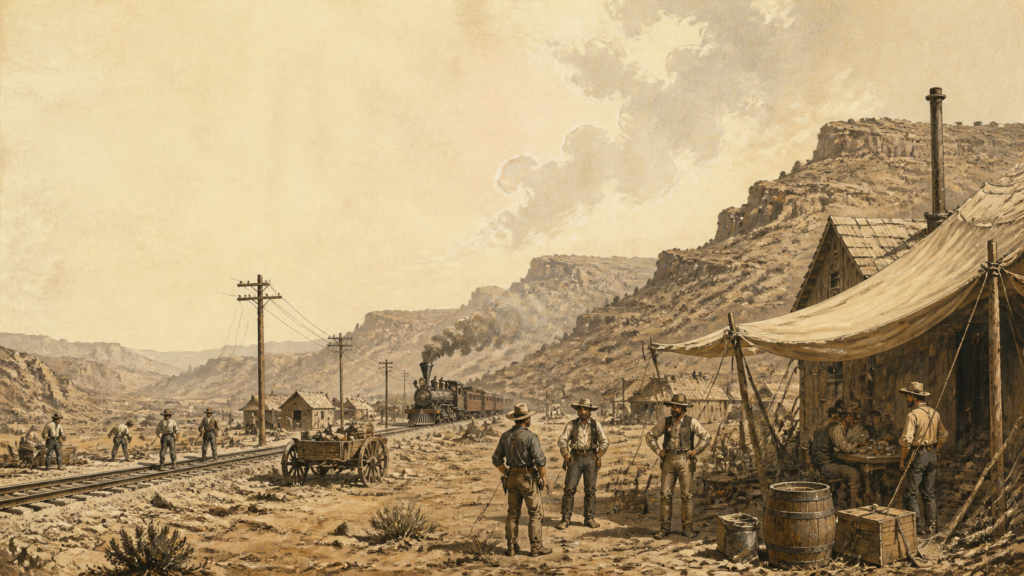
Sanderson started in 1882 as a division point on the Southern Pacific Railroad line through far West Texas. The settlement was founded by Charlie Wilson, an ex-soldier and saloonkeeper, and was initially called Strawbridge. After construction of the railroad roundhouse, the town became known as Sanderson, named for railroad construction engineer Thomas P. Sanderson. A post office followed in 1883.
Railroad division points were busy, rough places. They brought train crews, mechanics, freight, travelers, ranchers, cowboys, merchants, and people looking to make money from a fast-growing settlement.
Charlie Wilson was already positioned to do just that.
He opened the Cottage Bar, a popular gathering place for railroad workers, cowboys, and local ranchers. The Handbook of Texas describes Sanderson’s early days as those of an “unruly frontier town,” and the Cottage Bar was at the center of that world.
When Roy Bean Came to Town
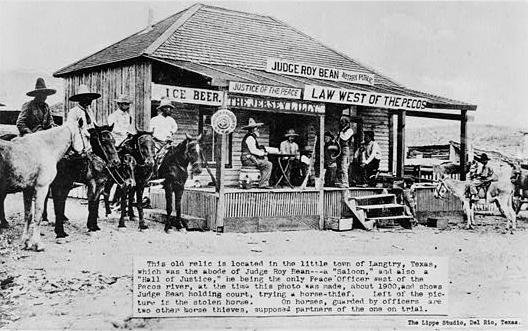
Roy Bean later became famous as the self-proclaimed “Law West of the Pecos” and the saloonkeeper associated with Langtry’s Jersey Lilly Saloon. But before Langtry became permanently linked with Bean’s name, he reportedly operated a saloon in the young railroad town of Sanderson—then still remembered in some accounts as Strawbridge or Strobridge.
Bean’s arrival created a problem for Charlie Wilson: competition.
Sanderson was new, small, and full of thirsty railroad and ranching trade. Two saloons were chasing the same customers. Wilson had the advantage of being local, established, and deeply connected to the town he helped create. Bean was the outsider.
That is where the legend begins.
The Kerosene Whiskey Story
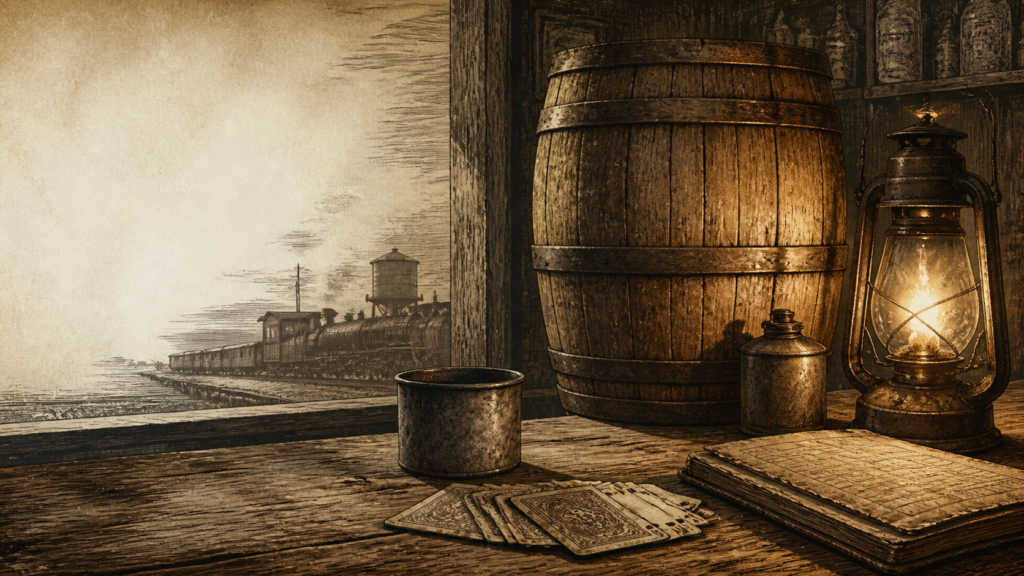
According to a long-repeated Sanderson tale, Charlie Wilson found a way to eliminate Bean’s competition: he had kerosene—sometimes called coal oil—added to Roy Bean’s whiskey barrels.
The result, the story says, was disastrous. Bean’s whiskey became undrinkable, his customers left, and his Sanderson saloon failed. Roy Bean eventually moved east along the railroad route to Langtry, where the Jersey Lilly Saloon and his frontier-court reputation made him one of the most famous characters in Texas history.
The story is the source of Sanderson’s colorful old nickname:
“The town too mean for Roy Bean.”
It is a great West Texas tale—two saloonkeepers, a growing railroad town, questionable whiskey, and a future folk hero allegedly run out by local competition.
Fact, Folklore, and a Good Story
The documented historical foundation is strong. Charlie Wilson founded early Sanderson, operated the Cottage Bar, and helped shape the The historical foundation is solid. Charlie Wilson helped found early Sanderson, operated the Cottage Bar, and played a central role in the railroad town that grew around the Southern Pacific line. Roy Bean also ran a saloon in Sanderson for a short time.
The famous kerosene-whiskey episode is different. It has been repeated in regional history and travel accounts, but no contemporary newspaper report, business record, court filing, or eyewitness account has yet been identified that proves exactly what happened.
That does not make the story unworthy of telling. It makes it Sanderson folklore rooted in a real frontier rivalry.
According to a long-repeated local legend, Charlie Wilson had kerosene added to Roy Bean’s whiskey barrels. The spoiled whiskey supposedly drove away Bean’s customers and helped send the future “Law West of the Pecos” on to Langtry.
The distinction matters. Sanderson’s connection to Roy Bean is real; the kerosene episode remains a great local tale that deserves to be remembered—and researched.
This version maintains transparency without sounding like you are undermining your own story. It also creates a nice invitation for readers who may possess a clipping, family account, photo, or record that helps confirm more of the legend.
A Town With Its Own Legend
The phrase “Too Mean for Bean” is more than a punchline. It captures the confidence and rough independence of early Sanderson.
This was not merely a stop along the railroad where Roy Bean passed through on his way to Langtry. It was a growing community with railroad workers, cattlemen, business owners, saloons, and a founder who appears to have understood that a frontier town belonged to the people willing to build it.
One particularly interesting clue remains for local researchers. Texas Parks & Wildlife Magazine reports that after Bean left Sanderson, his son remained there for the rest of his life. That raises more questions worth investigating:
- What was the son’s full name?
- Where did he live in Sanderson?
- Did he marry or have descendants in Terrell County?
- Is he buried locally?
- Do census records, cemetery records, newspapers, or family collections preserve his story?
Those questions may lead to the next chapter in the “Too Mean for Bean” story.
The Story Is Still Waiting
The Cottage Bar, Roy Bean’s short stay, and the kerosene-whiskey tale offer more than colorful local lore. They provide a window into Sanderson’s earliest identity: a hard-working railroad town where competition was fierce and people remembered the characters who made the place their own.
Future research may reveal the location of Bean’s Sanderson saloon, records connected to Charlie Wilson’s Cottage Bar, early newspaper mentions, photographs, or descendants who know more of the story.
Until then, Sanderson can claim a memorable piece of West Texas folklore:
Before it was the Cactus Capital of Texas, it was the town that was supposedly too mean for Roy Bean.
Editor’s Note
Charlie Wilson’s role in founding Sanderson, the Cottage Bar, and Roy Bean’s brief operation of a Sanderson saloon are supported by historical references. The claim that Wilson spoiled Bean’s whiskey with kerosene is a widely repeated local legend and is presented here as tradition rather than conclusively documented fact.tpwmagazine+2