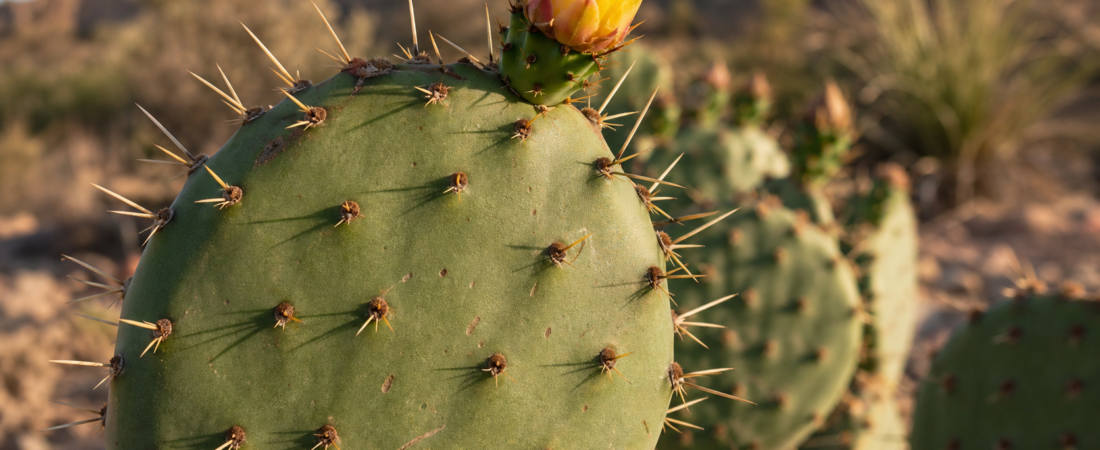
When people first arrive in Sanderson, Texas, they often notice the distance before they notice anything else. The sky feels wider. The hills rise abruptly from the desert floor. Highway 90 stretches east and west through a country that appears quiet, rugged, and almost untouched. Then, as you slow down and look closely, you begin to see what makes this place different: cactus everywhere.
They grow along the road cuts, on rocky slopes, in the draws, beside old fences, and around the town itself. Prickly pear, barrel cactus, yucca, ocotillo, sotol, and many other desert plants have always been part of the landscape here. They are not decorations added for visitors. They are part of the country that shaped Sanderson long before the railroad arrived, before the courthouse was built, and before anyone called this small West Texas town the Cactus Capital of Texas.
That title is more than a catchy slogan. It reflects the land, the history, and the identity of Sanderson. For residents, it is a reminder that this town has survived and adapted in a hard but beautiful corner of Texas. For visitors, it is an invitation to step off the highway, stretch their legs, and experience a side of the Big Bend region that many travelers pass too quickly.
A Desert Town With a Distinctive Landscape
Sanderson sits on the eastern edge of the Chihuahuan Desert, one of North America’s great desert regions. The town lies in Terrell County, surrounded by rugged limestone hills, dry creek beds, ranch country, and wide expanses of open land. It is a place where elevation, soil, rainfall, and geology come together to support an impressive variety of desert plants.
That diversity is one reason Sanderson earned its reputation among naturalists, hikers, photographers, and cactus enthusiasts. The landscape changes quickly as you move away from town. One hillside may be covered in prickly pear and agave, while another reveals barrel cactus, yucca, creosote, sotol, and flowering desert plants that become especially noticeable after rain.
For generations, people who lived in this part of West Texas understood that the cactus was both a symbol of the desert and a practical part of life in it. Cactus plants could provide food, shelter, fencing material, livestock forage in hard times, and a visual warning about the rough terrain ahead. Their blooms brought color to a country known for rock, dust, and sun. Their ability to survive long dry periods made them a fitting symbol for the people who made a home here.
Sanderson’s cactus identity is also connected to its setting near the meeting point of several ecological zones. The result is a landscape that does not feel exactly like the high desert around Alpine, the river country near Del Rio, or the deep canyons farther south in Big Bend. Sanderson is its own place. It is a transition country, and the plants tell that story.
Before the Cactus Capital Name
Long before Sanderson became known as the Cactus Capital of Texas, it was a frontier railroad town with a reputation for being rough around the edges.
The town began to take shape in the early 1880s when the Southern Pacific Railroad pushed westward through Terrell County. The railroad transformed this remote country. It brought workers, supplies, mail, commerce, and opportunity into a region where travel had previously been slow and difficult. The community first carried the name Strawbridge or Strobridge before becoming known as Sanderson, named for Thomas P. Sanderson, a railroad construction figure associated with the development of the line and its facilities.
The railroad made Sanderson an important division point. Train crews changed here, equipment was serviced, businesses opened, and people arrived looking for work or a new start. Ranchers used the rail line to connect their cattle operations with larger markets. Merchants supplied the growing community. Hotels, saloons, boarding houses, and shops followed the rails.
Like many frontier towns, early Sanderson developed a lively reputation. One local story connects the community with Judge Roy Bean, the legendary “Law West of the Pecos.” According to the story, Bean tried to establish himself in the young railroad settlement, only to find the town’s existing characters were not eager to make room for him. The tale helped create Sanderson’s old nickname: “the town too mean for Bean.”
Whether told around a kitchen table, in a museum, or to a visitor passing through town, that story captures something real about early Sanderson. This was not a place built for people looking for an easy life. It was built by railroad men, ranchers, merchants, lawmen, laborers, and families who understood the demands of living far from the larger cities of Texas.
Over the decades, Sanderson became the county seat of Terrell County and a center for the surrounding ranch country. It endured the rise and decline of rail employment, the changing economics of ranching, major weather events, floods, and the ever-present challenges of distance. Through all of it, the desert remained constant.
Turning the Desert Into an Identity
For many rural communities, the question is not whether they have a story. The question is whether they will tell it proudly enough for others to hear it.
Sanderson’s move toward the Cactus Capital of Texas identity gave the town a clear and authentic way to share its story. Instead of trying to imitate larger tourist destinations, Sanderson leaned into what it already had: a remarkable desert landscape, an unusual concentration of native cactus and plant life, deep local history, and a location along one of West Texas’s most scenic travel routes.
The designation helped turn the town’s natural setting into a point of pride. It gave travelers a reason to see Sanderson as more than a fuel stop between Del Rio and Marathon or Alpine. It encouraged visitors to look beyond the highway and discover the hills, the canyon views, the historic downtown, the local businesses, and the unmistakable West Texas character that makes the town memorable.
The title also fits Sanderson because cactus is a symbol of endurance. A cactus survives by conserving what it needs, adapting to difficult conditions, and thriving where many plants cannot. That description could just as easily apply to the people and businesses of Sanderson.
This is a town that has never depended on being easy to reach or easy to explain. Its strength has always been its independence, its resilience, and its willingness to remain itself. The Cactus Capital name gives that spirit a recognizable image.
The Cactus Capital Hiking Trail
One of the best places to understand why Sanderson carries this title is the Cactus Capital Hiking and Nature Trail. The trail gives visitors a chance to experience the desert landscape without traveling far from town. It is an especially good stop for people driving Highway 90, staying overnight in Sanderson, or looking for a short outdoor activity before continuing toward Big Bend National Park.
The trail climbs above town and opens up views of Sanderson’s surrounding hills, canyon country, and wide desert skies. Along the way, hikers can see native vegetation up close and gain a better appreciation for how much life exists in what first appears to be a dry, empty landscape.
A walk on the trail is not just a nature experience. It is a history lesson. From above town, you can see why the railroad chose this corridor, why early settlers built where they did, and why Sanderson became an important stop in Terrell County. You can also see the same terrain that has challenged ranchers, railroad workers, Border Patrol agents, travelers, and local families for more than a century.
The trail is particularly rewarding in the early morning or late afternoon, when the light softens and the desert colors become more vivid. After seasonal rains, the landscape can surprise first-time visitors with blooms and fresh growth. Even during dry periods, the plants reveal the intricate forms and toughness that define the Chihuahuan Desert.
For photographers, the trail offers a chance to capture cactus, limestone cliffs, dramatic skies, and views across the town. For families, it provides an accessible way to introduce children to West Texas nature. For travelers, it is an easy reminder that some of the best parts of a road trip happen when you take time to stop.
Sanderson’s Cactus Story Today
Today, the Cactus Capital of Texas identity appears in the way Sanderson presents itself to visitors, celebrates its landscape, and tells its history. It connects naturally with the Terrell County Visitor Center, local businesses, downtown attractions, hiking opportunities, and the larger Big Bend travel experience.
Visitors can come to Sanderson for a meal, coffee, a motel stay, a museum visit, or a quick break from the road. But the people who remember the town are usually the ones who take a little more time. They walk the trail. They visit the courthouse square. They look at the hills beyond town. They ask about the railroad, the floods, the ranches, and the old frontier stories.
The cactus becomes a starting point for all of that.
It is easy to see Sanderson’s desert plants as scenery, but they are really part of the town’s living history. They were here when the railroad arrived. They watched the town grow through the ranching years, the boom-and-bust cycles, and the changes of the twentieth century. They remain as Sanderson welcomes a new generation of residents, travelers, road trippers, hikers, and Big Bend explorers.
Plan Your Visit to the Cactus Capital
If you are traveling through West Texas, Sanderson deserves more than a quick glance through the windshield. Stop for a meal on Oak Street, visit local shops, learn more at the Terrell County Visitor Center, and make time for the Cactus Capital Hiking and Nature Trail.
Sanderson is still a remote town. That is part of its appeal. The pace is slower, the distances are real, and the desert has a way of making people feel small in the best possible sense. Here, the landscape is not something you drive past. It is the reason the town exists.
The next time you travel Highway 90 or plan a Big Bend road trip, look for Sanderson on the map and give yourself time to explore. You may arrive because it is a convenient stop in West Texas. You may leave understanding why the people who call it home are proud to call it the Cactus Capital of Texas.