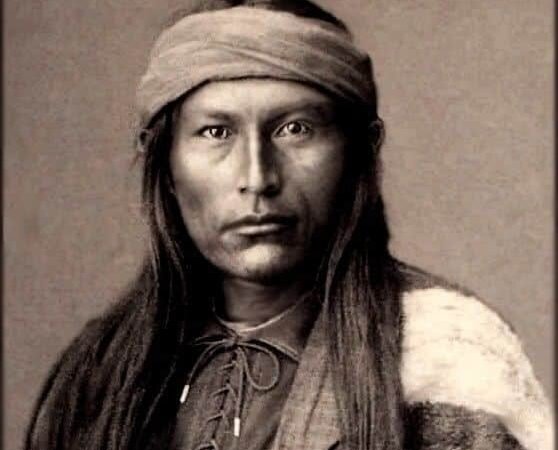
Sanderson Before 1882
Before Sanderson became a town in 1882, the land around it was already part of a much older West Texas story. Native peoples lived in and moved through the region for generations, Spanish explorers crossed the wider Texas frontier, and later travelers, ranchers, and soldiers passed through the remote desert country that would eventually become Terrell County.
Sanderson Before 1882: Native Peoples, Spanish Explorers, and the West Texas Borderlands
Sanderson, Texas did not begin as a town. Long before the railroad arrived in 1882, the land around modern Sanderson was part of a vast West Texas borderland shaped by Indigenous peoples, Spanish exploration, and centuries of movement across a harsh but meaningful landscape. The story of Sanderson begins well before the first buildings went up, because the land itself had already been lived in, crossed, and known for generations.
The earliest history of the area belongs to Native peoples. In West Texas, the landscape was not empty or untouched; it was part of a living world used for hunting, travel, trade, and survival. Evidence of Indigenous presence in Terrell County includes arrowheads, tools, burned-rock middens, caves, and shelters, showing that people had long histories in the region before settlement. In a broad West Texas context, the peoples connected to this frontier included Apache groups, Comanche groups, and other Native nations whose movement and influence shaped the region over time. Because local tribal history could vary by exact time period and location, it is best to describe Sanderson as part of a larger Indigenous borderland rather than claim a single tribe for the exact townsite without a more specific source.
Spanish exploration reached Texas early and helped define the frontier world Sanderson would later inherit. The first recorded European exploration of Texas was led by Álvar Núñez Cabeza de Vaca in the 1530s, after the Narváez expedition wrecked on the Gulf Coast. His journey across Texas included Andrés Dorantes de Carranza, Alonso Castillo Maldonado, and Estevanico. Later, Francisco Vázquez de Coronado pushed into the Texas and Plains frontier in the 1540s, expanding Spanish knowledge of the interior. Other Spanish figures important to Texas borderlands history include Antonio de Espejo, Gaspar Castaño de Sosa, Juan de Oñate, Alonso de León, Damián Massanet, Francisco Hidalgo, and Antonio Margil de Jesús. Their expeditions, missions, and frontier efforts did not establish Sanderson itself, but they helped shape the wider Spanish Texas world around it.
What made this region important was not just conquest or settlement, but movement. West Texas served as a corridor between larger centers of power, and the land that became Terrell County was part of a remote borderland where survival depended on water, distance, and local knowledge. Native groups moved through the area, Spanish and Mexican-era travelers crossed the frontier, and later ranchers, soldiers, and settlers followed the routes that connected scattered parts of the Southwest. Sanderson sat inside that much larger pattern of travel long before the railroad arrived.
By the time the Southern Pacific Railroad built through Terrell County in 1882, the region was still rugged and sparsely settled, but it was no longer just frontier ground. The railroad changed the direction of local history and helped create the town of Sanderson, which grew at a division point on the line. But the important thing to remember is that the town was not the beginning of the story. Sanderson was built on a landscape with a long Indigenous past and a deep Spanish frontier legacy.
Why this history matters
Sanderson’s pre-1882 history makes the town more interesting, not less. It ties the community to the larger history of West Texas, the Spanish borderlands, and the Native nations who shaped the region long before the railroad. That gives your site a stronger story to tell and helps search engines understand Sanderson as more than just a small town — it becomes a place with deep historical roots.