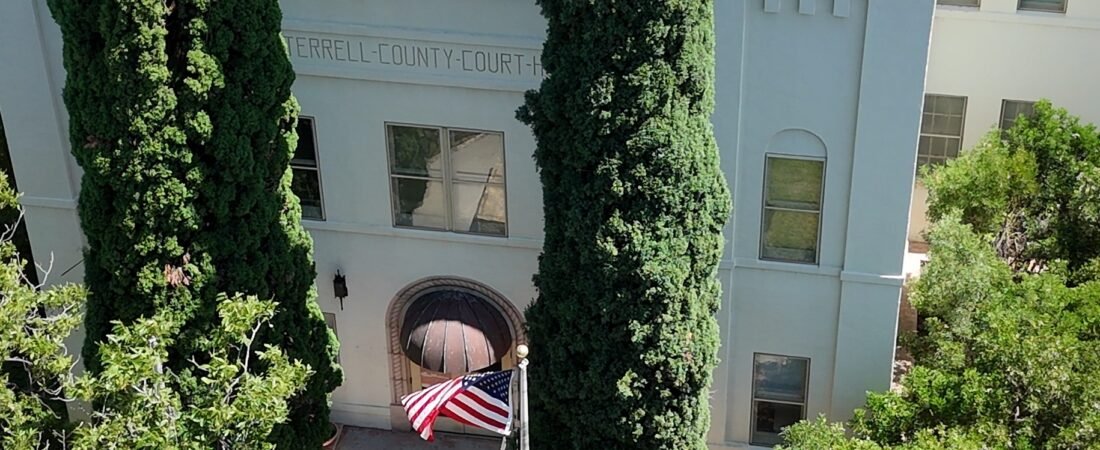
Terrell County officials, including the County Judge and Commissioners Court, are in the preliminary stages of reviewing long-standing delinquent property-tax records and considering whether outside perspective and specialized assistance could help address accounts that have remained unresolved for many years.
The concern is not limited to recent unpaid taxes. County officials are aware that some delinquent records date back many years, creating a backlog that can be difficult to evaluate, collect, or formally resolve. This concern has prompted the County Judge and county commissioners to seek outside perspective on the condition of the delinquent-tax roll and on options available for addressing older accounts.
No public meeting date, formal proposal, contract, or decision has been announced at this time. The work remains an early-stage information-gathering process.
Why Older Records Matter
A delinquent-tax roll is the list of property-tax accounts that remain unpaid after taxes become due. When records remain on the roll for years, they can become increasingly complicated.
Ownership may have changed, property may have passed through estates or inheritances, mineral interests may be involved, mailing addresses may be outdated, or the cost of pursuing a small balance may exceed what the county can reasonably recover. Some accounts may still be collectible. Others may require further documentation, legal review, payment arrangements, or another form of resolution.
Long-standing delinquent records can also make it harder for the county and other local taxing entities to determine how much outstanding revenue is realistically recoverable. A careful review can help distinguish accounts that may be resolved from those needing more research or a different collection strategy.
Potential Benefit for Terrell County
For a small, economically constrained rural county, cleaning up delinquent-tax accounts that have gone untouched for years could potentially return meaningful revenue to local taxing entities.
That does not mean every old account can—or should—be handled through the same collection process. A more active and organized review could identify accounts where taxes remain legally collectible, ownership can be confirmed, or payment arrangements may be possible.
Revenue recovered from valid delinquent accounts could help support public operations and services funded through local property taxes. Just as important, reviewing old records can help identify balances that are unlikely to be collected without excessive cost, giving county officials a clearer picture for budgeting and long-term planning.
The appropriate measure of success should not simply be the number of notices sent or cases filed. It should be transparent results: accounts resolved, net collections after legal and administrative costs, fair treatment of taxpayers, and a more accurate, manageable delinquent-tax roll.
What Is Being Reviewed
The County Judge and Commissioners Court are seeking a clearer understanding of the age, type, and status of unpaid property-tax accounts, particularly those that have remained unresolved for an extended period.
Questions likely to be part of the review include:
- How many delinquent accounts date back several years or longer
- Which older accounts may still be collectible
- Which records need title, ownership, mineral-interest, estate, or legal research
- Whether current procedures adequately address older and lower-dollar accounts
- What payment arrangements and taxpayer communication options may be available
- Whether specialized outside assistance could help evaluate or resolve the backlog
- How the county can improve the accuracy and manageability of its delinquent-tax records
A review does not mean every unpaid account will result in litigation, a tax sale, or other enforcement action. Each account may have different facts, legal requirements, and possible solutions.
Public Interest and Safeguards
Property-tax collections support the local taxing entities that rely on those revenues, including county government and, where applicable, schools, hospitals, and other public services. At the same time, any collection effort should provide clear notice, fair procedures, accurate records, and reasonable opportunities for taxpayers to resolve valid balances.
If the county later considers a formal contract, policy change, or expanded collection program, residents should have an opportunity to review the proposed terms and ask questions about:
- Expected costs and collection fees
- Payment-plan availability and hardship-related options
- Notice and due-process procedures
- Measures of success, including net collections after costs
- Reporting requirements and public oversight
- How older, complex, or potentially uncollectible accounts will be handled
What Happens Next
For now, this is an early information-gathering process prompted by concern over a delinquent-tax backlog that includes records dating back many years. The County Judge and Commissioners Court are working to better understand the issue and the available options before any formal action is taken.
SandersonTexas.org will share additional publicly available information if a Commissioners Court agenda item, public meeting notice, proposed agreement, or official county statement becomes available.