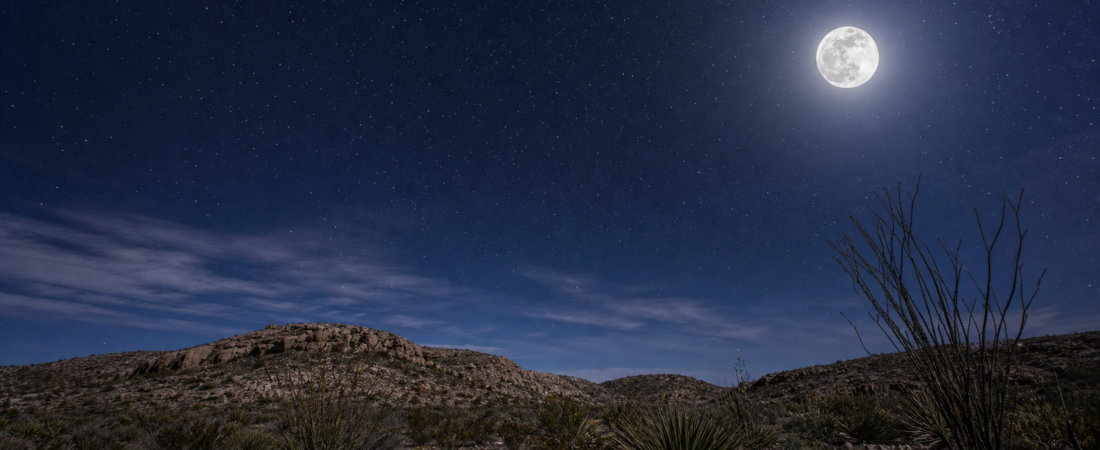
Most travelers know Sanderson, Texas as a stop along U.S. Highway 90—a place to get fuel, find a meal, or stay overnight before continuing toward Big Bend National Park. But after sunset, the Cactus Capital of Texas offers another reason to slow down: wide-open West Texas night skies, desert quiet, and a view that reminds you just how big the country can feel.
For anyone planning a Big Bend road trip, staying overnight in Sanderson is more than a practical break from a long drive. It is an opportunity to step outside, let your eyes adjust to the dark, and enjoy the stars over Terrell County.
Whether you are interested in casual stargazing, West Texas night photography, or simply a peaceful evening before continuing south and west, Sanderson deserves more than a quick stop.
Why Sanderson is a good overnight stop for stargazing
Sanderson sits on the edge of the Big Bend region, far from Texas’s largest cities and their constant glow of traffic, streetlights, and development. The town itself is a working community with homes, businesses, and lights, but the country surrounding it quickly opens into long desert horizons and sparsely populated ranchland.
That setting makes a night in Sanderson feel noticeably different from an overnight beside a major interstate.
The larger Big Bend region is internationally known for exceptional night skies. Big Bend National Park has the darkest night skies of any national park in the lower 48 states, according to the National Park Service. The Greater Big Bend International Dark Sky Reserve covers more than 15,000 square miles in Texas and Mexico and is the world’s largest certified Dark Sky Place.
Sanderson is not presented here as a designated dark-sky destination or a substitute for a formal park viewing area. It is, however, a natural place to begin appreciating the quieter, darker character of the region—especially for travelers who are staying overnight before heading deeper into Big Bend country.
What Sanderson feels like after dark
There is a different rhythm to Sanderson after sunset.
The heat begins to ease. Desert colors fade from gold to purple and blue. Highway traffic becomes less frequent, and the sounds of the day settle down. On a clear evening, the sky begins to take over.
You do not need a telescope or a complicated plan to appreciate it. Sometimes the best approach is also the simplest:
- Finish dinner.
- Step outside where it is safe and permitted.
- Put away the bright phone screen.
- Give your eyes time to adjust.
- Look up.
The reward is not just the number of stars you can identify. It is the feeling of being in a place where the horizon is still open, the sky is still visible, and the pace is slower than the road that brought you there.
Stargazing tips for Sanderson and West Texas
A little preparation makes nighttime travel more enjoyable—and much safer—in remote West Texas.
Plan around the moon
For the darkest conditions, plan your stargazing near a new moon or after the moon has set. A bright full moon can be beautiful, but it also makes fainter stars and the Milky Way harder to see.
If you are traveling specifically to photograph stars or observe the Milky Way, check the moon phase before you leave home.
Check clouds, wind, and weather
Clear skies matter more than anything else. Before going outside, check the local forecast for clouds, thunderstorms, wind, and changing temperatures.
West Texas weather can shift quickly. Summer heat may give way to storms, and evenings can become cooler than visitors expect. In every season, carry water and a light layer.
Let your eyes adjust
Your eyes need time to adapt to darkness. Avoid looking at a bright phone screen, vehicle interior light, or white flashlight. If possible, use a red-light flashlight or turn your phone brightness down as far as practical.
Give yourself 20 to 30 minutes without bright light. You will notice far more stars after your eyes adjust.
Stay safe and respect private property
Remote West Texas is beautiful, but it is not a place to make careless decisions after dark.
- Use only public places or property where you have permission to be.
- Do not enter private ranch land or unfamiliar roads without authorization.
- Avoid blocking roads, gates, driveways, or highway shoulders.
- Arrive at any viewing location before dark when possible.
- Keep water, a charged phone, and enough fuel in your vehicle.
- Let someone know where you are going if you plan to travel outside town.
The best stargazing experience is one that respects the people, land, wildlife, and working ranches that make this country what it is.
Night photography in Sanderson, Texas
Sanderson can be a rewarding stop for photographers who enjoy open landscapes, older buildings, railroad character, cactus country, and big skies.
You do not have to travel far to find a meaningful composition. A quiet street, a historic building, a weathered sign, a distant ridge, or a simple desert horizon can become a strong night photograph when paired with a clear sky.
For a basic camera setup, start here:
- Use a tripod or stable surface.
- Choose a wide-angle lens if you have one.
- Open the aperture as wide as your lens allows—often f/2.8 or lower.
- Start with a 10- to 20-second exposure.
- Start around ISO 1600 to 3200, then adjust for your camera and available light.
- Use a remote shutter or two-second timer to reduce camera shake.
- Manually focus on a bright star, distant light, or far horizon before taking the photograph.
Phone cameras can also capture impressive West Texas evenings. Use night mode when available, stabilize the phone against a solid surface, and focus on silhouettes, sunset color, moonrise, and the changing sky rather than relying on heavy digital zoom.
If you use a drone, remember that flying after dark brings added legal, safety, and equipment requirements. Follow current FAA rules, understand your aircraft’s night-flying capabilities, and never fly in a way that puts people, property, or yourself at risk.
Make Sanderson part of your Big Bend trip
A night in Sanderson can give your trip a better rhythm. Rather than rushing through a long day of driving, you can stop, eat, rest, enjoy a quiet evening, and start the next morning with more energy for Big Bend National Park or the rest of the region.
For planning help, read these guides:
- Stay Overnight in Sanderson, Texas Before Your Big Bend National Park Adventure
- First-Time Visitor’s Guide to Sanderson, Texas: Cactus Capital on the Road to Big Bend
- Weekend in Sanderson, Texas: Cactus Capital Road Trip Itinerary
- Driving Through Remote West Texas: What to Know Before You Reach Sanderson
- How Sanderson Became the Cactus Capital of Texas
Start your visit with local information from the Terrell County Visitor Center, then give yourself time to experience the town after the daytime drive is over.
A simple Sanderson stargazing checklist
Before heading out after dark, make sure you have:
- A clear-weather forecast
- A charged phone and flashlight
- Water and a light jacket
- Enough fuel for your planned drive
- A safe, legal place to stop or sit
- Respect for private property and local roads
- Patience to let your eyes adjust
Look up before you leave
Sanderson does not need to compete with larger West Texas destinations to leave an impression. Its appeal is quieter than that.
It is the break between long highway miles. It is the desert air after sundown. It is a chance to stop looking at a screen, let your eyes adjust, and remember how large the Texas sky can be.
On your next Big Bend road trip, do not treat Sanderson as only a place to pass through. Stay overnight, enjoy the quiet, and look up.