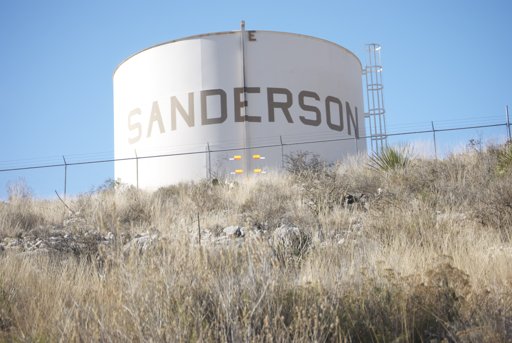
Water has always shaped life in Sanderson, Texas. In a remote corner of West Texas, dependable water is not simply one more local service. It is part of what makes homes livable, ranches workable, businesses possible, and long-distance travel safer.
Terrell County is dry, wide-open country. The Rio Grande and Pecos River are part of the region’s geography, but water in the desert has never been as simple as looking at a map. Rivers can be distant or difficult to reach, rain can be scarce for long periods, and communities have historically relied on wells, springs, windmills, tanks, and careful storage.
For generations, the question has been the same: where will dependable water come from, and will it be there when it is needed?
Water Made Settlement Possible
Long before modern water infrastructure, people in this part of Texas understood that water determined where daily life could take hold. Ranchers needed wells, windmills, tanks, and reliable water points for livestock. Travelers needed to know the next dependable stop. Small settlements depended on water not only for drinking and cooking, but also for animals, sanitation, fire protection, and the basic ability to remain in a hard country.
Sanderson developed as a railroad community in the early 1880s, and the railroad permanently changed the area. It brought workers, supplies, mail, commerce, and a reason for people to build a town here. Yet the railroad did not erase the practical realities of the Trans-Pecos. Water still had to be found, lifted, stored, protected, and managed.
That is part of the larger history of Terrell County. The county’s landscape includes major waterways, draws, springs, and groundwater, but its relatively low rainfall and rough country meant water access was often local, limited, and hard-earned. Wells and stock tanks were not minor features of life in West Texas. They were survival infrastructure.
A Place of Scarcity—and Sudden Floods
Sanderson’s water story is not only a story of dry weather. It is also a story of the danger created when heavy rain falls in the wrong place at the wrong time.
On June 11, 1965, a catastrophic flash flood struck Sanderson after intense rainfall upstream. Water surged down Sanderson Canyon and through the town, destroying homes and businesses, killing residents, and leaving a deep mark on the community. The Texas Historical Commission later recognized the disaster with a historical marker in Sanderson.
Accounts of the disaster describe a wall of water moving into the town early that morning, turning ordinarily dry channels and drainage routes into a path of destruction. The event remains one of the most important chapters in Sanderson history, not only because of the lives lost, but because it showed how quickly conditions can change in desert country.
The 1965 flood should not be confused with Sanderson’s drinking-water system. A flash flood and a public water supply are different matters. But both are part of the same larger reality: water is powerful here, whether there is too little of it for too long or too much of it all at once.
The flood also led to protective work intended to reduce the danger of a similar catastrophe. Historical accounts note that eleven flood-control dams were built after the disaster.
The Meaning of a Working Well
For much of modern Terrell County, public water depended heavily on a single older well. A 2023 article by the Texas Association of Counties reported that about 1,000 people in the county received water from one well built in the 1940s. The report said that infrastructure serving the system had been installed about 50 years earlier and required replacement.

That fact deserves to be understood in human terms. A community well is not just a hole in the ground, a pump, or a line on a map. It supports kitchens, bathrooms, schools, local businesses, public facilities, emergency response, and the basic expectation that families can turn on a faucet.
In a large city, water infrastructure may be easy to overlook because there are layers of redundancy, large crews, multiple supply sources, and nearby equipment. In a remote county, the margins can be smaller. A well, a tank, a pumphouse, and a working line can carry enormous importance.
The 2023 Texas Association of Counties report said Terrell County received $2 million in Texas Department of Agriculture colonia funds for water-system improvements. The announced work included replacing water lines, repairing the water storage tank and pumphouse, and building a deeper second well because the aquifer had dropped since the original well was drilled decades earlier.
Those are meaningful public investments. They recognize a basic truth: essential infrastructure cannot be ignored simply because a community is small or far from a major city.
Groundwater Remains a Public Concern
The future of Sanderson’s water is tied closely to groundwater. The Terrell County Groundwater Conservation District maintains a public page containing meeting agendas, notices, rulemaking materials, and regional groundwater-planning documents, including materials posted in 2025.
The existence of those records does not establish that Sanderson has a current water emergency. It does show that groundwater conditions, planning, and conservation remain active public responsibilities.
That is appropriate. Groundwater requires long-term attention because aquifers do not respond overnight. Water levels, well use, rainfall patterns, recharge, drought, development, and local demand all matter over time. Planning is most useful before a system reaches a breaking point, not after.
For a place such as Sanderson, reliable water means more than having water available on an ordinary day. It means understanding the system, maintaining it, investing before critical parts fail, and communicating clearly when repair work, conservation, or unusual conditions affect customers.
Why Residents Should Care
Residents have the most at stake in a dependable system. Water affects daily routines, household budgets, public health, sanitation, local commerce, emergency readiness, and the ability of older residents and families to remain in their homes.
It also affects confidence in the future. When people consider whether to live in, invest in, retire in, or raise a family in a small community, they pay attention to the essentials: roads, medical access, schools, public safety, communications, and water.
Sanderson cannot control every challenge that comes with being a remote West Texas town. Distance is real. Drought is real. Severe weather is real. But a community can decide whether it treats essential infrastructure as an afterthought or as a foundation.
Water belongs in the foundation.
Why Travelers Should Care
Sanderson is an important stop on U.S. 90 and part of the larger route through Big Bend Country. Visitors pass through for fuel, meals, lodging, desert scenery, historic sites, and access to destinations across the Trans-Pecos.
A reliable community water system is part of what helps any rural destination welcome visitors. It supports local businesses, restrooms, lodging, restaurants, emergency services, and basic public health. It is one of the quiet systems behind a good road trip.
At the same time, anyone traveling through Terrell County should plan for remote conditions.
Travel Smart in Remote West Texas
- Carry more drinking water than you think you will need.
- Keep fuel levels high before crossing long stretches of highway.
- Watch weather forecasts and road conditions, especially during periods of heavy rain.
- Never drive around barricades or into water covering a roadway.
- Keep basic supplies in the vehicle, including food, a charged phone, a paper map or offline navigation, and emergency equipment.
- Check official local and state sources if weather or emergency conditions may affect roads or services.
This is not a warning against visiting Sanderson. It is practical advice for appreciating the region responsibly. The same remoteness that makes this country beautiful also requires travelers to prepare.
What Water Reliability Should Look Like
No system is perfect, especially in a small and remote county. The reasonable standard is not perfection. It is responsible planning, maintenance, and clear communication.
For residents and visitors, dependable water infrastructure should include:
- Readily available water-quality information.
- Clear outage, repair, boil-water, and conservation notices when needed.
- Plain-language updates on major projects and public funding.
- Routine monitoring of wells, water levels, and system capacity.
- Long-term maintenance plans for lines, tanks, pumps, and related equipment.
- Practical information that helps households, businesses, ranchers, and travelers prepare.
These are not partisan expectations. They are common-sense expectations for an essential service.
A Water Story Still Being Written
The story of water in Sanderson is a story of adaptation. It includes springs and wells, ranch tanks and windmills, railroad-era growth, drought, destructive flooding, old infrastructure, and modern investments meant to strengthen the system.
It is also a story about what a small community chooses to protect.
Sanderson has endured because people here have learned to work with a difficult landscape rather than pretend it is something else. Reliable water should be viewed in the same way: as an ongoing responsibility that requires attention, investment, practical planning, and public confidence.
For Terrell County residents, water is part of daily life. For travelers, it is part of safely crossing remote West Texas. For Sanderson’s future, it is nothing less than essential.
Note to Readers
This article uses published historical and public sources to explain why water has long mattered in Sanderson and Terrell County. It does not claim that the current municipal water supply is unsafe, that a particular project was not completed, or that local officials have failed to act. For current service conditions, water-quality results, outages, or official conservation guidance, readers should consult the responsible water utility and relevant state agencies.
Sources and Further Reading
- Texas Association of Counties, “Running on Empty” — 2023 reporting on Terrell County’s water system, historic well, infrastructure needs, and announced colonia-funded improvements.
- Texas Historical Commission, “Sanderson Flash Flood” — historical marker documentation for the June 11, 1965 flood.
- Center for Big Bend Studies, “The Sanderson Flood of 1965: Crisis in a Rural Texas Community” — historical account of the 1965 flood and its community impact.
- Texas State Historical Association, “Terrell County” — overview of county geography, water features, settlement, and economic history.
- Terrell County Groundwater Conservation District, “Public notices and meeting materials” — posted agendas, groundwater-planning documents, and conservation-district materials.